
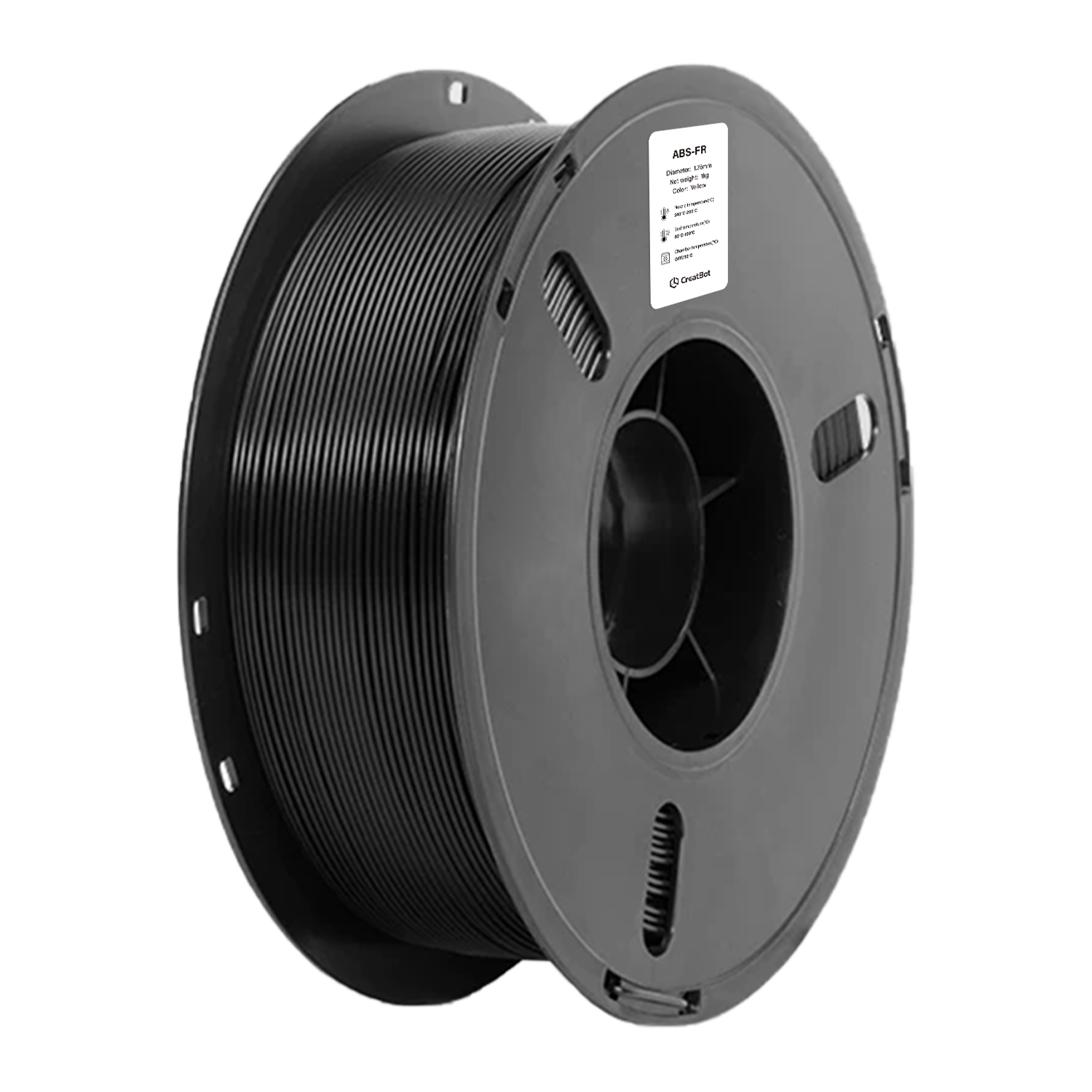
ABS-FR

Electrical Enclosures

Electronics Housings

EV Charging Piles

Switch Panels
ABS-FR 3D Printing Filament Features



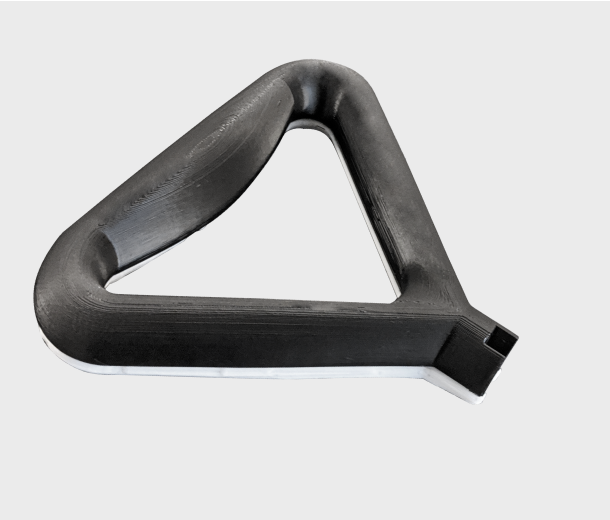
CreatBot ABS-FR Print Preview
Advantages of Printing with CreatBot Filament
Premium Raw Material Quality
Selected high-quality ABS resin and environmentally friendly flame retardants, with the flame retardant system uniformly dispersed to ensure batch-to-batch consistency of flame retardancy. Every batch undergoes full inspection of flame retardant rating, tensile strength and diameter tolerance before shipping, ensuring stable and reliable performance.
Factory Calibrated, Plug and Print
Filament formulation, melt flow and diameter tolerance (±0.03mm) are calibrated for the full CreatBot machine range, with exclusive parameters built into the slicing software. No repeated tuning required - unpack and print, even beginners can achieve stable print quality.
Self-Extinguishing, Safe and Reliable
The UL94 V-0 flame retardant rating ensures printed parts self-extinguish quickly after flame contact without burning drips, minimizing fire risk in applications such as electrical enclosures and EV charging pile shells, providing reliable protection for equipment and personnel safety.
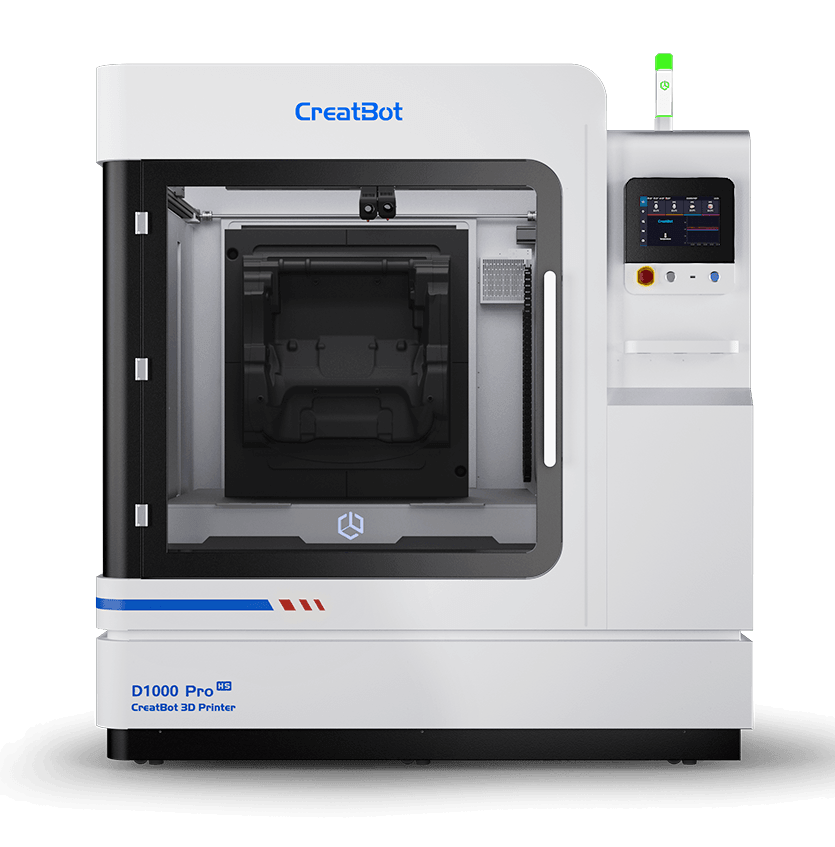
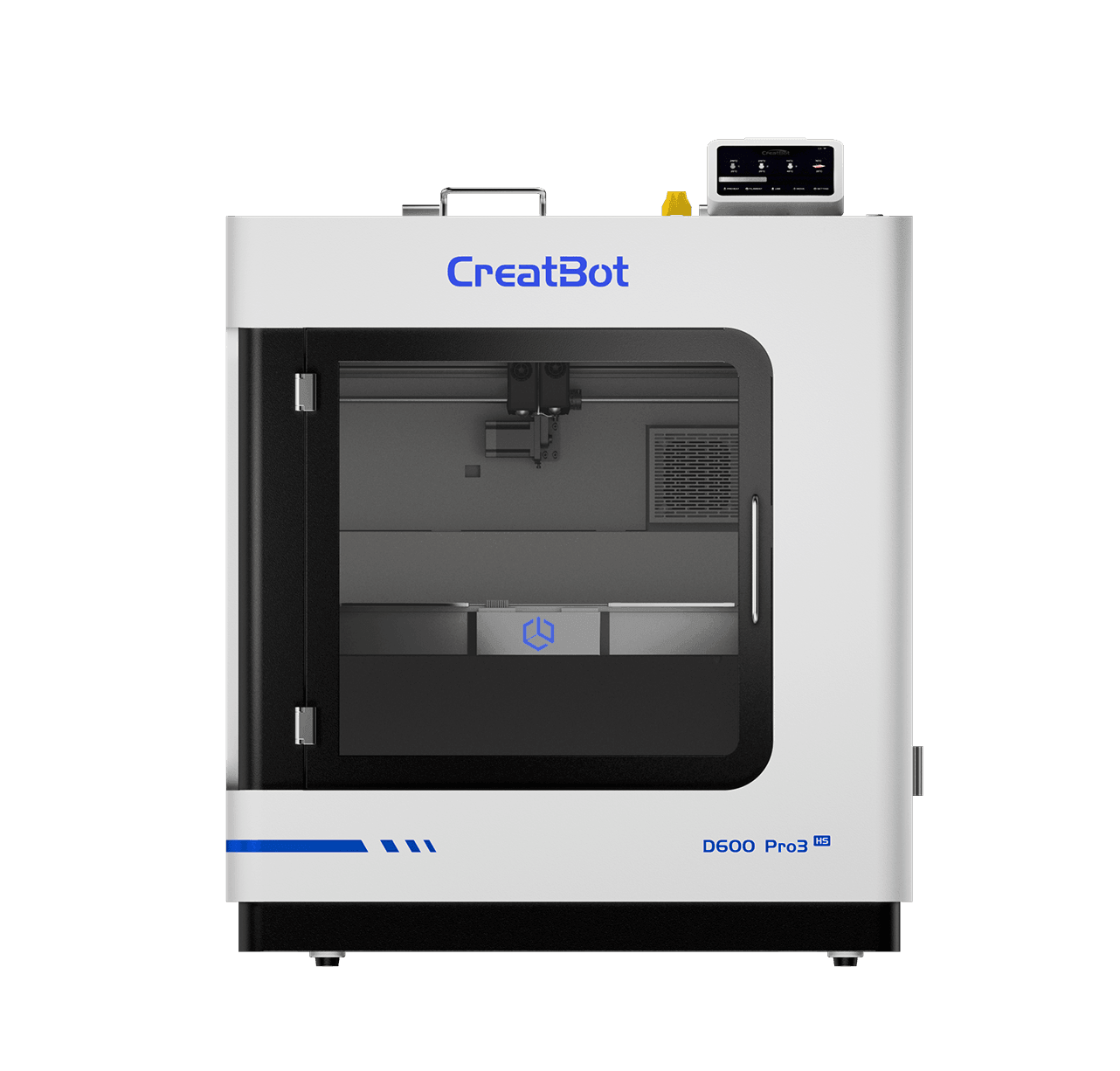
Supported 3D Printers
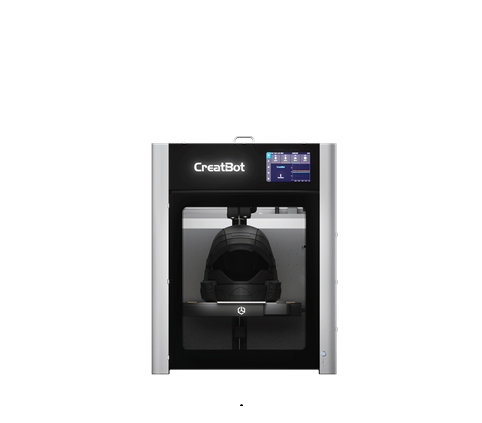
CreatBot industrial 3D printers are designed for high-performance materials. The following models feature heated chambers and high-temperature nozzles for professional-grade results.
Technical Datasheet
| Item | Value |
|---|---|
| Pre-Printing Drying Conditions | 60-80°C, 6-8 H (Forced-air drying oven) |
| Nozzle Temperature | 230-260°C |
| Nozzle Diameter | 0.4 / 0.6 / 0.8 / 1.0 mm |
| Bed Surface Treatment | 3D printing spray / PVP glue stick / specialty adhesive |
| Bed Temperature | 90-110°C |
| Chamber Temperature | / |
| Cooling Fan | / |
| Print Speed | < 200 mm/s |
| Physical Properties | Test Method | Value |
|---|---|---|
| Density | ISO1183 | 1.18g/cm³ |
| Flame Retardant Rating | UL94 | V-0 |
| Saturated Water Absorption | 25°C, 55%RH | / |
| Melt Index | 220°C, 10 kg | 21g/10 min |
| Melting Temperature | DSC, 10°C/min | / |
| Vicat Softening Temperature | ISO 306, GB/T 1633 | / |
| Heat Deflection Temperature | ISO 75, 0.45MPa | 90°C |
| Mechanical Properties | Test Method | Value |
|---|---|---|
| Tensile Strength XY | ISO 527, GB/T 1040 | 35 MPa |
| Tensile Strength Z | ISO 527, GB/T 1040 | / |
| Young's Modulus XY | ISO 527, GB/T 1040 | / |
| Young's Modulus Z | ISO 527, GB/T 1040 | / |
| Elongation at Break XY | ISO 527, GB/T 1040 | 10% |
| Elongation at Break Z | ISO 527, GB/T 1040 | / |
| Flexural Strength XY | ISO 178, GB/T 9341 | 72 MPa |
| Flexural Strength Z | ISO 178, GB/T 9341 | 26 MPa |
| Flexural Modulus XY | ISO 178, GB/T 9341 | 2280 MPa |
| Flexural Modulus Z | ISO 178, GB/T 9341 | 1400 MPa |
| Impact Strength XY | ISO 179, GB/T 1043 | 22 kJ/m² |
| Impact Strength Z | ISO 179, GB/T 1043 | 3 kJ/m² |
ABS-FR Filament FAQ
ABS-FR stands for Flame Retardant ABS, produced by adding environmentally friendly flame retardants to an ABS matrix, giving it self-extinguishing flame retardant behavior. Compared with regular ABS, ABS-FR is better suited for applications with fire safety requirements such as electrical enclosures, electronics housings, EV charging pile shells and switch panels. The addition of flame retardants slightly reduces strength and toughness, but it still meets engineering requirements, at a slightly higher price than regular ABS.
ABS-FR is suitable for various applications with fire safety requirements, typically including: ① Electrical enclosures - distribution box housings, circuit breaker housings, junction boxes, etc.; ② Electronics housings - power adapter housings, UPS housings, inverter housings, industrial control equipment housings, etc.; ③ EV charging - AC/DC charging pile shells, charging gun housings, etc.; ④ Switch panels - wall switch panels, socket panels, industrial switch housings, etc.; ⑤ Automotive interior parts and home appliance components with flame retardancy requirements.
① Drying - dry in a forced-air drying oven at 60-80°C for 6-8 hours before printing to avoid bubbles and surface defects caused by moisture; ② Nozzle temperature - 230-260°C; too low weakens interlayer adhesion, too high causes degradation; ③ Nozzle diameter - 0.4 / 0.6 / 0.8 / 1.0 mm all work; ④ Bed temperature - 90-110°C, combined with 3D printing spray, PVP glue stick or specialty adhesive to enhance first-layer adhesion and prevent warping; ⑤ Print speed - recommended below 200 mm/s to ensure interlayer bonding and surface quality.
A closed or semi-closed chamber is recommended. ABS-FR has a heat deflection temperature of 90°C, and thermal shrinkage stress accumulates layer by layer during printing. Large ambient temperature fluctuations (e.g. open-frame printers affected by drafts) can easily cause warping, cracking or even detachment from the bed. A closed chamber stabilizes the ambient temperature and reduces thermal stress, significantly improving the success rate of large models. If you only have an open-frame printer, reduce warping risk by adding an enclosure, using a PEI flexible steel sheet, and increasing brim width.
While meeting flame retardancy requirements, ABS-FR maintains good engineering performance: tensile strength (XY) 35 MPa, elongation at break (XY) 10%, flexural strength (XY) 72 MPa / (Z) 26 MPa, flexural modulus (XY) 2280 MPa / (Z) 1400 MPa, impact strength (XY) 22 kJ/m² / (Z) 3 kJ/m², heat deflection temperature 90°C. The difference between XY and Z direction performance is common to 3D printing materials; for critical structural parts, it is recommended to orient the main load direction within the XY plane.
ABS-FR is hygroscopic, and moisture absorption can cause bubbles, stringing and reduced surface quality during printing, so proper storage is important: ① Store unopened filament in a cool, dry place (15-25°C, humidity < 30%), away from direct sunlight; ② Opened filament should be resealed with desiccant or stored in a filament dryer; ③ If not used for more than 3 days, remove the filament from the printer and seal it. If moisture is detected, dry in a forced-air drying oven at 60-80°C for 6-8 hours, then cool to room temperature before use.
ABS-FR achieves the UL94 V-0 flame retardant rating, the highest classification in the UL94 vertical burning test: specimens self-extinguish quickly after the flame is removed and produce no burning drips that ignite cotton, effectively stopping flame spread. Printed parts such as electrical enclosures, EV charging pile shells and switch panels therefore carry a significantly lower fire risk in case of accidental flame contact, meeting the strict fire safety requirements of the electrical and electronics industry.
More Materials
Contact Us


3D Printers
Message
Application Fields
Quick Links