
CreatBot Filament
CreatBot Filament Series
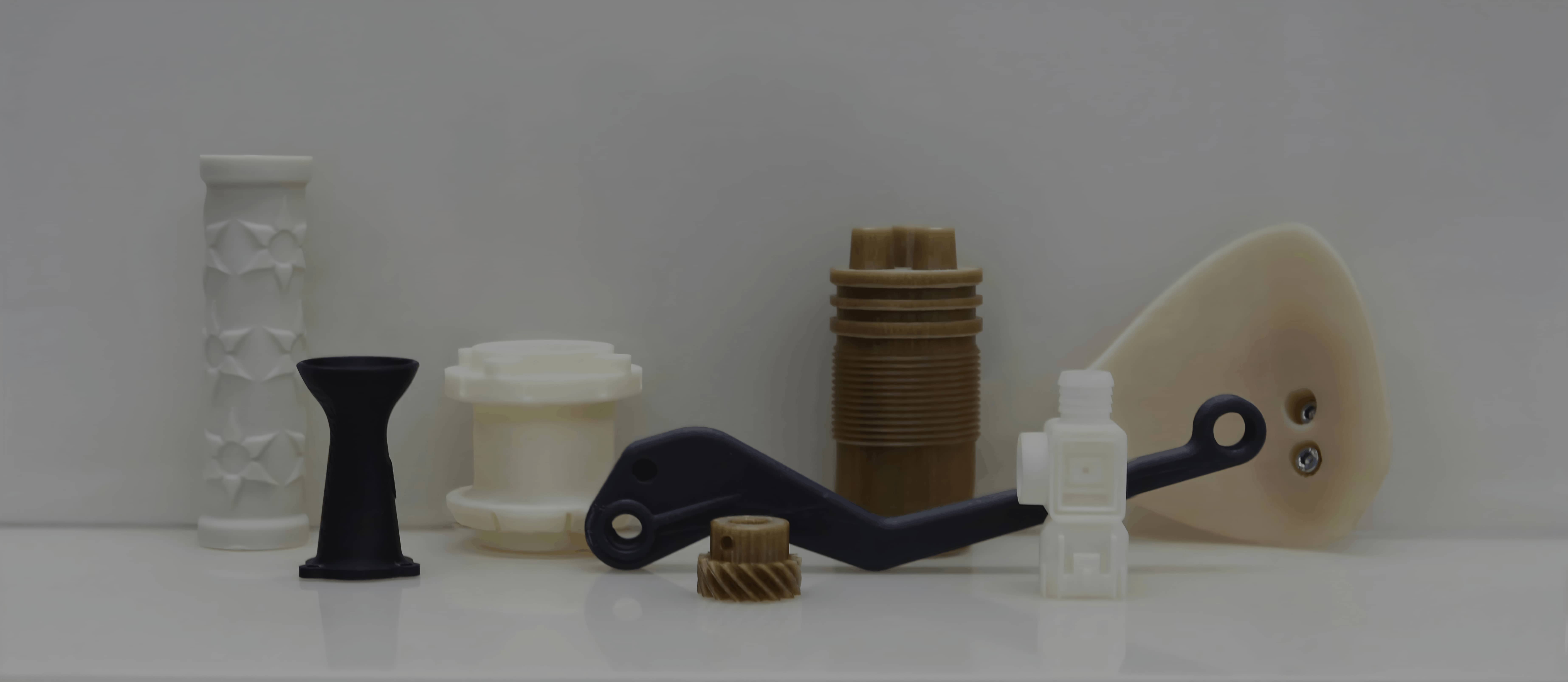
CreatBot's engineering-grade materials and high-performance polymers come from BASF and other material leaders, delivering stable and reliable printing quality on CreatBot printers. CreatBot filaments are widely used across many industries, covering most material application scenarios. The “Open Filament Program” lets you use any material you prefer or can easily source. We provide the same technical support for every filament on the market — including parameter guidance, material testing and printing services. Let's explore your application field together!
PLA
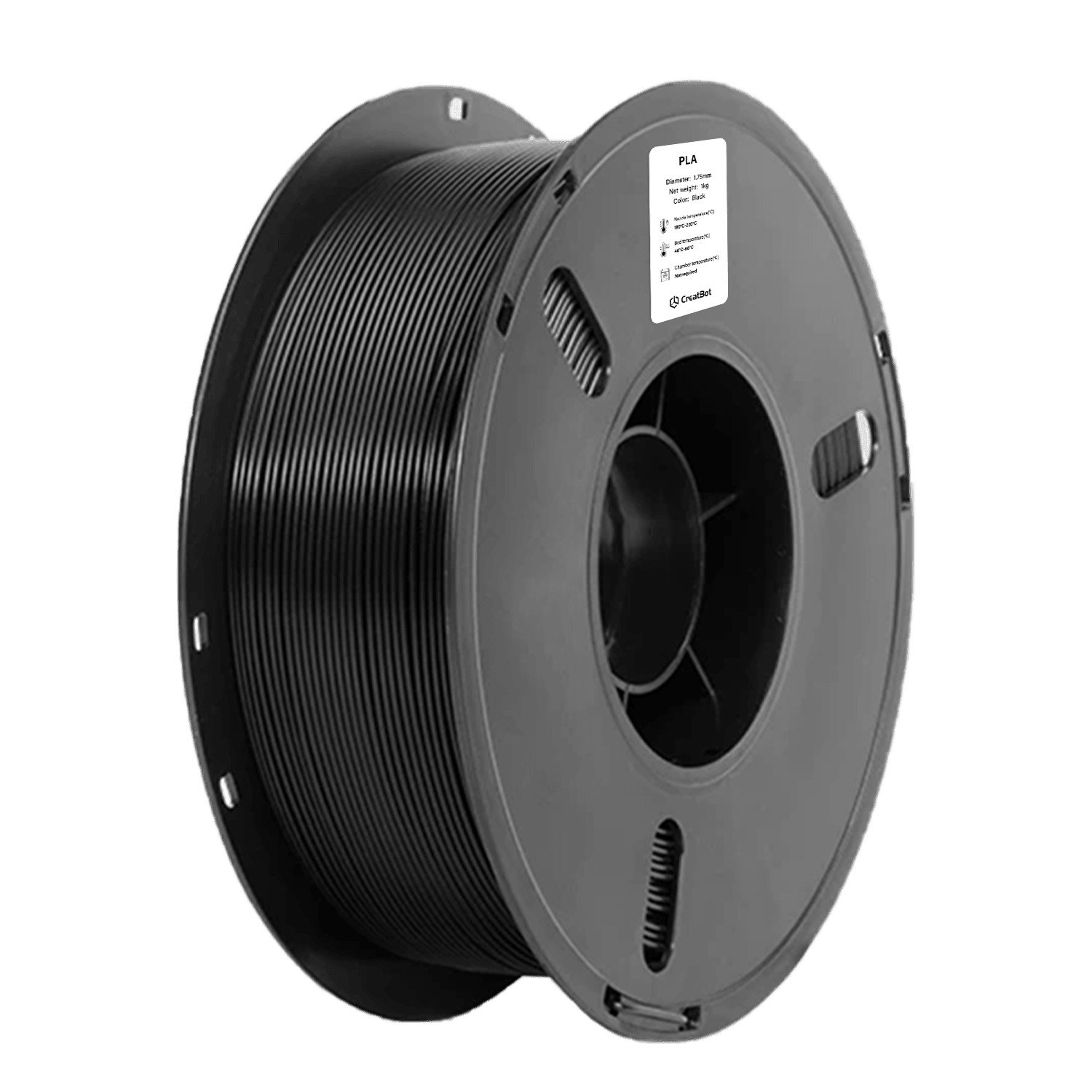
PLA (polylactic acid) is a degradable 3D printing material. It has excellent comprehensive performance, economic benefits, printing model surface is fine and smooth, and not easy to warp deformation. Widely used in the market for a variety of printers.


Directions
Mechanical stability at high temperature
Deformation resistance under external force
Impact resistance under impact
Applications
Not sure which filament to choose? Browse by application — from prototyping to industrial production — and find the recommended materials for your use case.
Product Prototyping
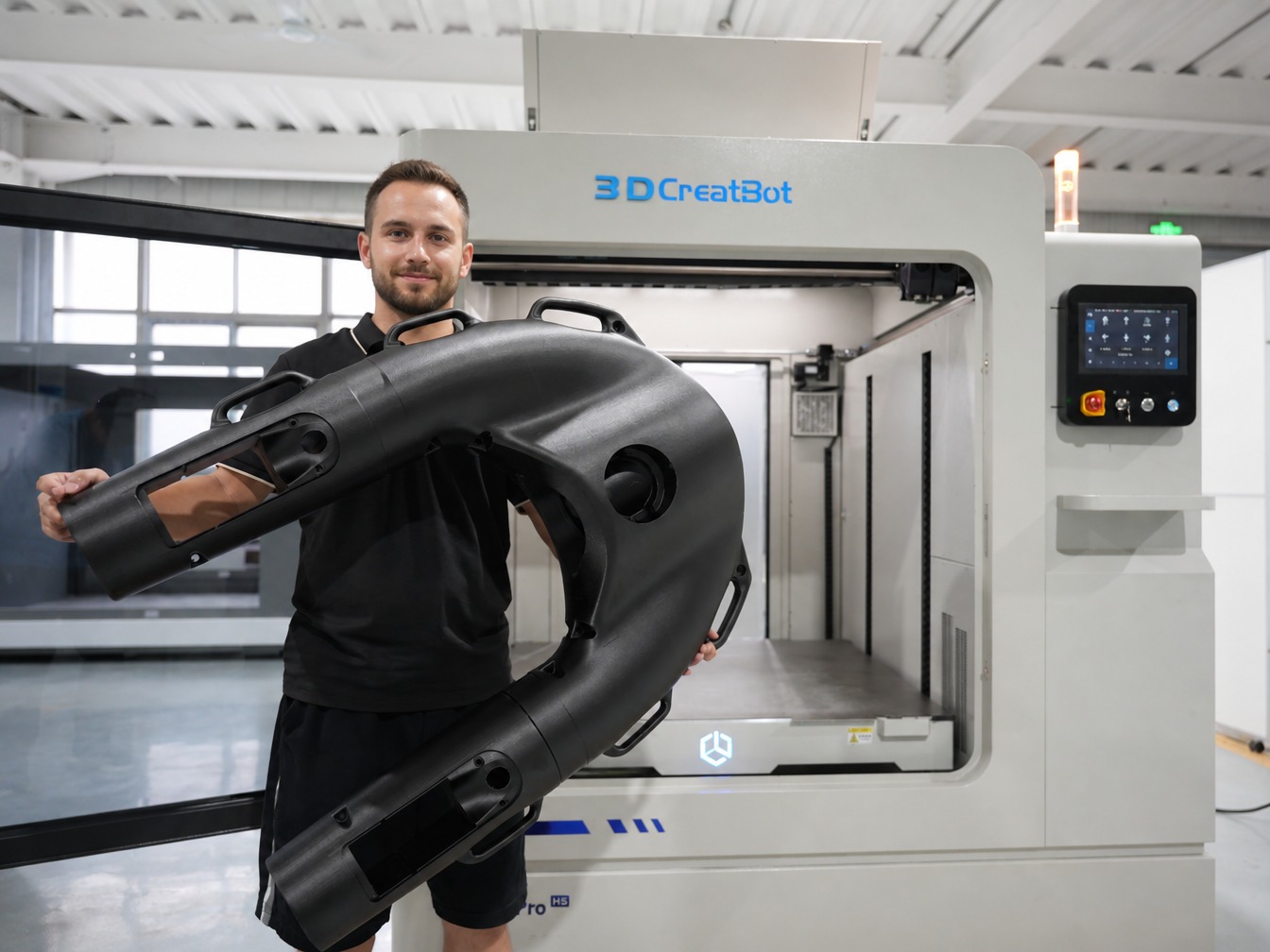
Product prototyping demands speed and accuracy: repeated samples and fast iterations before design freeze, where print success rate and turnaround directly set the pace of development. PLA prints straight out of the box with a fine surface finish — the first choice for appearance models; PLA-CF offers higher rigidity and resists scuffs during handling and display; PETG and ABS are tough enough for snap-fit trial assembly. Samples print right away and revised designs go straight back to print — no tooling waits, keeping the validation cycle short.
- Fast sampling: wide process window, print and go
- Fine surface: what you print is what you evaluate
- Free redesign: revised parts go straight back to print
Supported Printer Models
Explore which CreatBot 3D printers support each filament, and click through for full specifications.
How to Choose the Right 3D Printing Filament
With 23 professional filaments in four categories, choosing the right material comes down to three questions: what mechanical load the part must carry, what temperature it will face in service, and whether it needs special properties such as flame retardancy, ESD safety, or water solubility. The quick guide below maps each requirement to the right CreatBot filament family.
Universal
Everyday prototyping and general-purpose parts: PLA for easy, accurate printing, PLA-CF for stiffer, better-looking prototypes, PETG for toughness and weather resistance, TPU 95A for flexible, rubber-like parts, and PC for strong, heat-tolerant functional parts.
Engineering Grade
Demanding functional parts: ABS and ASA for impact strength and outdoor UV stability, ABS-FR for flame-retardant requirements, ASA-CF and PETG-ESD for special industrial needs, Ultra PA / PA-CF / PA-GF and PET-CF for metal-replacement strength, and PPS-CF for extreme chemical and heat resistance.
High Performance Grade
High-temperature engineering: PEEK, PEEK-CF and PEEK-GF plus PEI 1010 / 9085 withstand continuous service temperatures of 150-250 °C with excellent mechanical and chemical performance - ideal for aerospace, automotive and semiconductor applications printed on CreatBot high-temperature machines.
Support Material
Reliable support for complex prints: PVA dissolves cleanly in water for dual-extrusion supports, while S-270 and S-350 provide breakaway support optimized for large-format CreatBot printers.
Filament Performance Comparison
Quantified scores across performance dimensions — check the metrics you care about most and quickly find the right filament.
Get CreatBot Filament?
Get It NowFrequently Asked Questions
They fall into four groups: universal materials (PLA, PLA-CF, PETG, ABS, etc.) for everyday creativity and general functional parts; engineering materials (PC, PA, PPS-CF, etc.) with higher strength and heat resistance; high-performance materials (PEEK, PEI, etc.) for high-temperature, chemical-resistant and demanding conditions; and support materials (PVA, S-270, S-350) for complex overhang structures. Use the “Application Scenarios” module above to pick a material by use case quickly.
Yes. CreatBot printers are not locked to any material brand. The “Open Filament Program” lets you use any filament you prefer or can easily source, and we provide the same technical support for every filament on the market — parameter guidance, material testing and printing services — so third-party materials print reliably too.
Absolutely. Tell us your requirements (heat resistance, strength, flexibility, chemical resistance, etc.) and our engineers will recommend a suitable material with parameter guidance. Material testing and printing services are also available to verify results before bulk purchase — submit your request via “Get It Now” at the bottom of this page.
Select your machine in the “Machine Compatibility” module to see its full list of recommended filaments. Each material page lists the recommended nozzle temperature, bed temperature and drying conditions; you can also contact us at any time for complete parameter guidance.
Most filaments (especially PA, PC, PPS and PEEK) absorb moisture. Keep them sealed away from light with desiccant after opening; damp filament causes stringing, bubbles and lower strength. If it gets damp, dry it at the temperature and duration recommended on the material page and it will print well again.
Submit your request via “Get It Now” at the bottom of this page, or contact your local authorized distributor. Both small and bulk orders are supported; pricing and lead time will be confirmed by our sales team after your inquiry.
For prototyping and appearance models, start with PLA (fine surface finish, fast prints) or PLA-CF for higher rigidity. For functional validation and industrial parts, choose by working conditions: PETG or ABS for liquid contact and repeated assembly, PC for high temperatures and heavy loads, Ultra PA as a metal substitute for structural parts. For education and research, PLA is the safe and easy-to-print choice. If unsure, contact us and our engineers will provide one-on-one material recommendations.
Yes. CreatBot multi-extruder printers support combining PLA/PETG/ABS with support materials such as PVA, S-270 and S-350 for better overhang results. Filament compatibility per printer can be checked in the Supported Printers module.
Contact Us


3D Printers
Message
Application Fields
Quick Links