
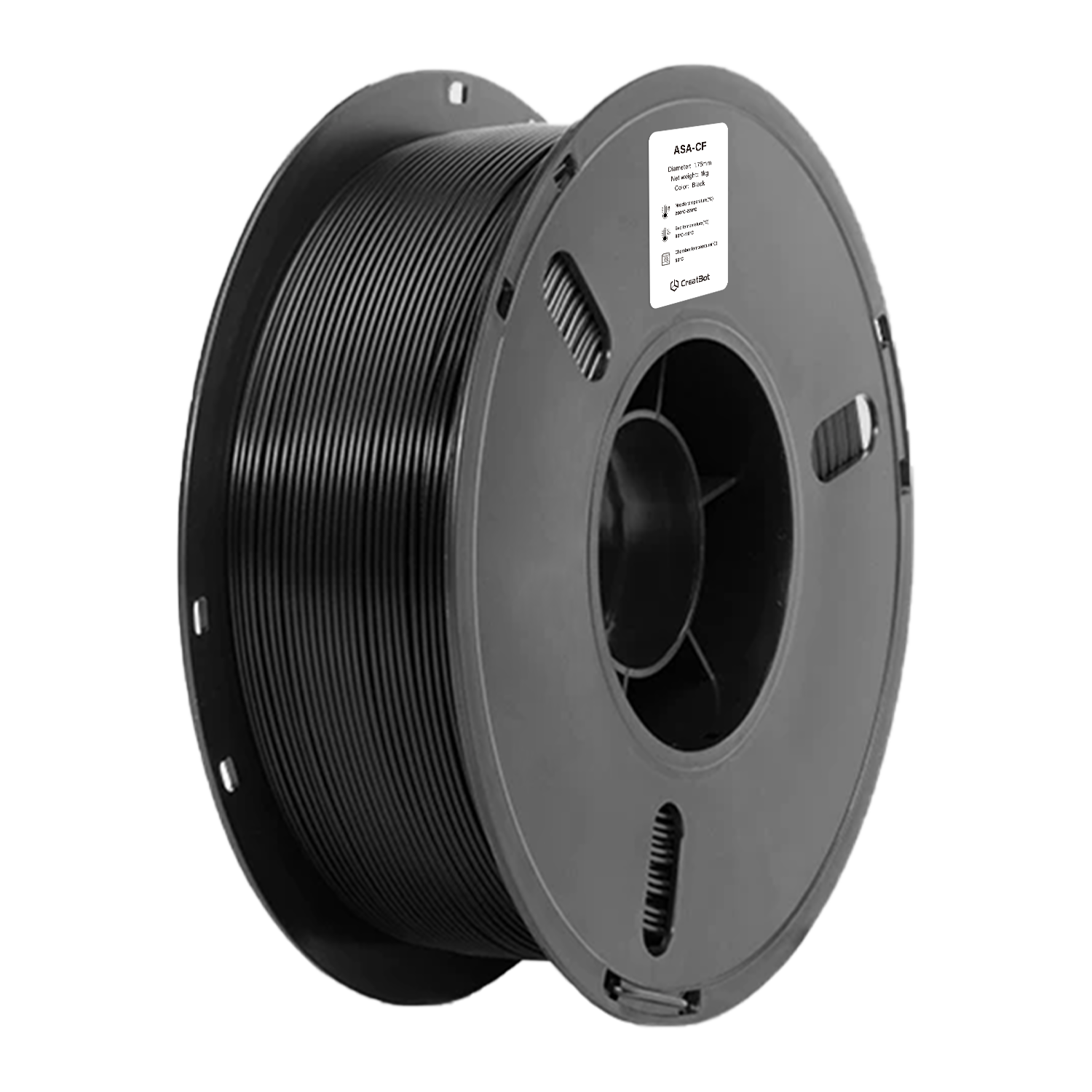
ASA-CF

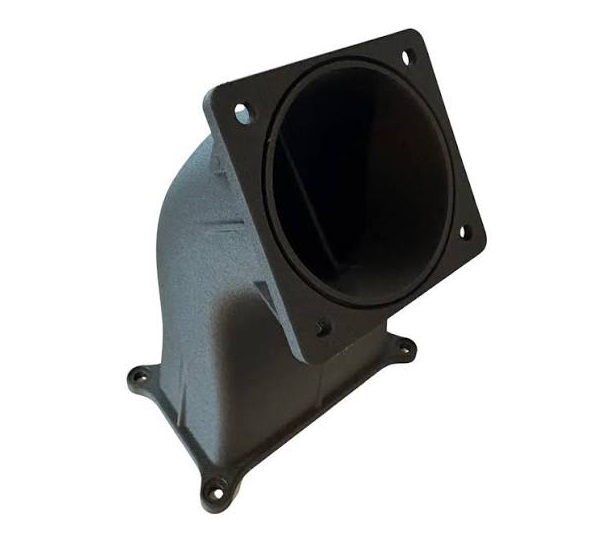
Structural Parts

Automotive Parts

Outdoor Equipment

Drones & Models
ASA-CF 3D Printing Filament Features



CreatBot ASA-CF Print Preview
Advantages of Printing with CreatBot Filament
Premium Raw Material Quality
Selected prime ASA resin and high-quality carbon fiber from leading chemical companies ensure material purity from the source. Every batch undergoes full inspection of tensile strength, melt index and diameter tolerance before shipping, ensuring stable and reliable performance.
Factory Calibrated, Plug and Print
Filament formulation, melt flow and diameter tolerance (±0.03mm) are calibrated for the full CreatBot machine range, with exclusive parameters built into the slicing software. No repeated tuning required - unpack and print, even beginners can achieve stable print quality.
Carbon Fiber Reinforced, Stiff Yet Tough
Chopped carbon fibers are uniformly dispersed in the ASA matrix, greatly improving rigidity and dimensional stability while effectively suppressing warping and shrinkage during printing. Printed parts retain outdoor weather resistance while achieving mechanical strength closer to engineering plastics, suitable for functional and structural parts.
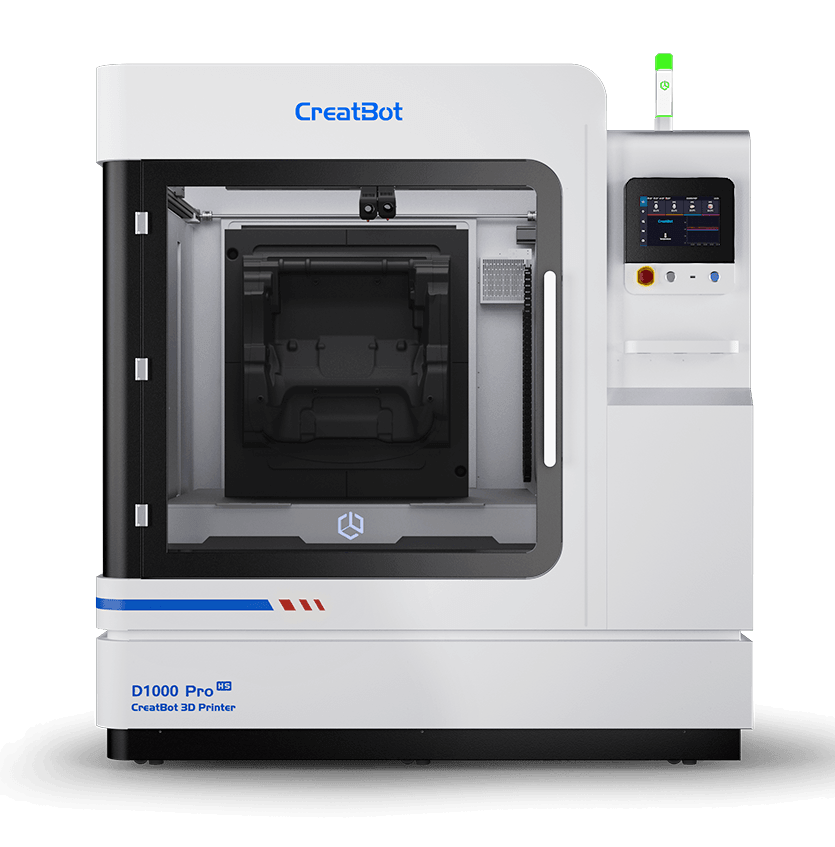
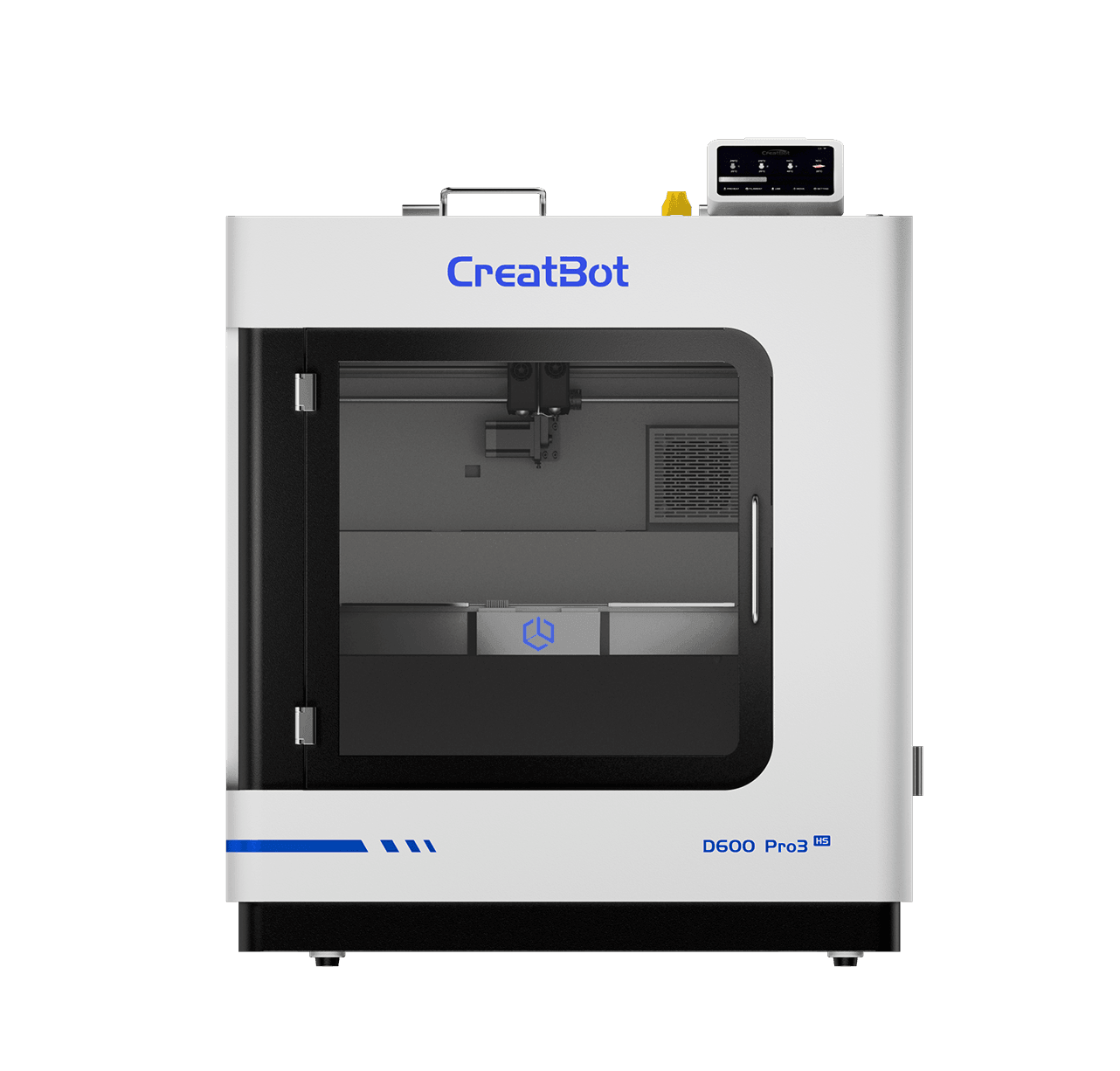
Supported 3D Printers
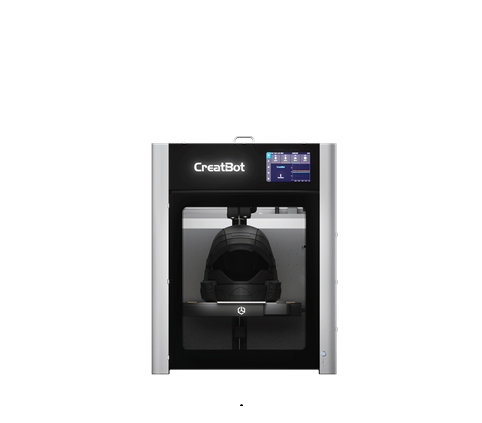
CreatBot industrial 3D printers are designed for high-performance materials. The following models feature heated chambers and high-temperature nozzles for professional-grade results.
Technical Datasheet
| Item | Value |
|---|---|
| Pre-Printing Drying Conditions | 80-90°C, 6-8 H (Forced-air drying oven) |
| Nozzle Temperature | 250-280°C |
| Nozzle Diameter | 0.4 / 0.6 / 0.8 / 1.0 mm |
| Bed Surface Treatment | 3D printing spray / PVP glue stick / specialty adhesive |
| Bed Temperature | 80-100°C |
| Chamber Temperature | 45-60°C |
| Cooling Fan | 0-75% |
| Print Speed | ≤250 mm/s |
| Physical Properties | Test Method | Value |
|---|---|---|
| Density | ISO1183 | 1.02g/cm³ |
| Saturated Water Absorption | 25°C, 55%RH | 0.33% |
| Melt Index | 280°C, 2.16 kg | 1.74g/10 min |
| Melting Temperature | DSC,10°C/min | 210°C |
| Vicat Softening Temperature | ISO 306, GB/T 1633 | 108°C |
| Heat Deflection Temperature | ISO 75, 0.45MPa | 110°C |
| Mechanical Properties | Test Method | Value |
|---|---|---|
| Tensile Strength XY | ISO 527, GB/T 1040 | 32 MPa |
| Tensile Strength Z | ISO 527, GB/T 1040 | 29 MPa |
| Young's Modulus XY | ISO 527, GB/T 1040 | 4100 MPa |
| Young's Modulus Z | ISO 527, GB/T 1040 | 2200 MPa |
| Elongation at Break XY | ISO 527, GB/T 1040 | 9.3% |
| Elongation at Break Z | ISO 527, GB/T 1040 | 4.2% |
| Flexural Strength XY | ISO 178, GB/T 9341 | 3700 MPa |
| Flexural Strength Z | ISO 178, GB/T 9341 | 1300 MPa |
| Flexural Modulus XY | ISO 178, GB/T 9341 | 70 MPa |
| Flexural Modulus Z | ISO 178, GB/T 9341 | 30 MPa |
| Impact Strength XY | ISO 179, GB/T 1043 | 13.3 kJ/m² |
| Impact Strength Z | ISO 179, GB/T 1043 | 9.2 kJ/m² |
ASA-CF Filament FAQ
CreatBot ASA-CF uses standard 1.75mm filament with industrial-grade ±0.03mm diameter tolerance control and is compatible with the vast majority of FDM 3D printers that support ASA-type materials. The printer must have a heated bed (recommended 80-100°C), an extrusion system that can stably reach above 250°C, and a closed printing chamber or protective enclosure is recommended. Since the material contains carbon fiber, a hardened steel nozzle (e.g. 0.4mm hardened steel) is strongly recommended, as ordinary brass nozzles are quickly worn by carbon fiber. Although compatibility is broad, for the best print quality and stability we strongly recommend pairing CreatBot ASA-CF with CreatBot industrial 3D printers, whose closed heated chamber and exclusive slicing parameters can fully unlock the performance advantages of CreatBot ASA-CF filament.
ASA-CF is a high-performance engineering material with carbon fiber added to the ASA matrix. Compared with standard ASA it offers: ① Rigidity - carbon fiber raises Young's modulus to 4100 MPa (standard ASA about 2350 MPa), an increase of about 75%, with a flexural modulus of 70 MPa, significantly enhancing flexural stiffness; ② Dimensional stability - carbon fiber effectively suppresses shrinkage and warping during printing, giving higher dimensional accuracy when printing large parts; ③ Heat resistance - heat deflection temperature of about 110°C, higher than standard ASA (about 90°C); ④ Surface texture - carbon fiber gives the material a matte black texture with a more premium appearance. Selection advice: choose ASA-CF for structural, functional and lightweight parts with high requirements for rigidity and dimensional stability; choose standard ASA for scenarios where appearance, color and cost matter more. Both have equally excellent weather resistance and are suitable for outdoor use.
CreatBot ASA-CF recommends a nozzle temperature of 250-280°C and a bed temperature of 80-100°C. Specific temperature settings should be adjusted according to model size, layer height, print speed and equipment environment. Tuning tips: ① Always dry before printing - 6-8 hours of forced-air drying at 80°C to avoid surface roughness and strength loss caused by moisture absorption in carbon fiber composites; ② For the first layer, raise the nozzle temperature by 5-10°C and reduce print speed to 20-30mm/s to enhance first-layer adhesion; ③ For large models, set the bed temperature near the upper end of the recommended range (about 100°C) and add a brim to reduce warping; ④ When using a closed chamber, keeping the chamber at 45-60°C significantly reduces thermal stress between layers and the risk of cracking; ⑤ A hardened steel nozzle is mandatory, as brass nozzles are quickly worn by carbon fiber. It is recommended to print a temperature tower first to find the optimal temperature window for your environment.
With the high rigidity from carbon fiber reinforcement and ASA's inherent excellent weather resistance, ASA-CF is widely used across several fields. Typical applications include: ① Structural parts - mechanical brackets, fixtures, mounting bases, load-bearing components and other functional parts with high rigidity and dimensional stability requirements; ② Automotive parts - mirror housings, air intake grilles, badge bases, sensor brackets, etc., with UV resistance meeting vehicle outdoor service life requirements; ③ Outdoor equipment - sensor housings, outdoor surveillance devices, weather station enclosures, garden equipment, etc., resistant to yellowing and cracking under long-term sun and rain exposure; ④ Drones and models - frames, propeller guards, gimbal mounts and other lightweight high-rigidity components; ⑤ Industrial tooling - inspection fixtures, positioning jigs, production line tooling, etc.; ⑥ Outdoor electrical enclosures - garden lights, outdoor socket boxes, solar equipment housings, etc.
Yes, ASA-CF must be printed with wear-resistant nozzles made of hardened steel, ruby or tungsten carbide. Reason: carbon fiber is extremely hard (Mohs hardness about 7-8) and will quickly wear ordinary brass nozzles (Mohs hardness about 3), causing enlarged nozzle orifices, uneven extrusion, reduced print accuracy and even clogging. A 0.4mm hardened steel nozzle is recommended, balancing precision and wear resistance. Carbon fiber dust handling tips: ① After printing, small fiber burrs may appear on part edges and can be gently sanded with fine sandpaper; ② Wear a mask when sanding or post-processing to avoid inhaling carbon fiber dust; ③ Clean the print bed and printer interior regularly to prevent carbon fiber dust from entering moving parts and affecting rail life; ④ Store printed parts separately after using carbon fiber materials to avoid fiber dust contaminating other materials.
ASA-CF is less hygroscopic than nylon (PA) but slightly more than standard ABS. The addition of carbon fiber lowers the matrix proportion, reducing the overall moisture absorption tendency, but prolonged exposure to humid environments will still cause moisture absorption, leading to bubbles, surface roughness and reduced interlayer adhesion during printing. Proper storage: ① Unopened filament should be stored in a cool, dry place (temperature 15-25°C, humidity < 30%), protected from direct sunlight; ② Opened filament is recommended to be sealed in bags with desiccant (silica gel desiccant, recommended 5-10g per spool) or stored in a filament dryer at 10-20% relative humidity; ③ If not used for a short period (more than 3 days), remove the filament from the printer and seal it. If moisture is detected (obvious bubbling sounds when printing, whitening on the filament surface or rough extrusion), dry it in a forced-air oven at 80-90°C for 6-8 hours, then cool to room temperature in a dry environment before normal use.
Although CreatBot ASA-CF can theoretically be printed on open-frame printers, we strongly recommend using a closed or semi-closed printing chamber for best results. Reasons: ASA-CF has a glass transition temperature of about 100°C and a heat deflection temperature of about 110°C, and thermal shrinkage stress accumulates layer by layer during printing. If the ambient temperature fluctuates greatly (e.g. open-frame printers affected by air conditioning and drafts), interlayer thermal stress can cause warping, cracking or even detachment from the bed. A closed chamber stabilizes the ambient temperature at 45-60°C, significantly reducing thermal shrinkage stress and greatly improving the success rate of large models (over 15cm). For industrial large-format printing (such as the CreatBot D600 Pro3 HS series), a heated temperature-controlled chamber is a key condition for print quality. If you only have an open-frame printer, you can reduce warping risk by adding an acrylic enclosure around the printer, using anti-warp adhesive or a PEI flexible steel sheet, and increasing brim width.
More Materials
Contact Us


3D Printers
Message
Application Fields
Quick Links